
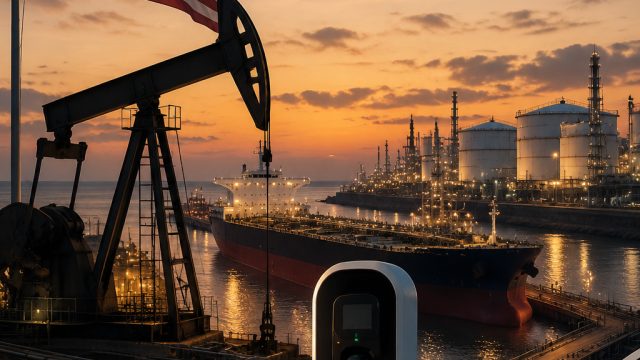
Impact of U.S. Energy Policies on Global Oil Trade and Security
The ongoing evolution of U.S. energy policies is now a focal point in discussions about global oil trade and security. Recent statements from Energy Secretary Chris Wright indicate a significant shift in the geopolitical landscape, particularly regarding the control of crucial maritime routes like the Strait of Hormuz.
The Current State of Oil Trade
In the past 24 hours, it was reported that approximately 72 vessels successfully navigated through the Strait of Hormuz, carrying around 19 million barrels of oil. This volume underscores the Strait's pivotal role in global oil transportation, with roughly one-fifth of the world's oil supply passing through this narrow waterway.
The Role of the U.S. Energy Secretary
Energy Secretary Wright's recent pronouncements are notable not just for their content but for their timing. As international tensions rise, particularly regarding Iran's influence in the region, the U.S. is actively working to ensure that its energy policies maintain the free flow of oil through this critical chokepoint.
Strategic Measures and Their Implications
Wright emphasized that the U.S. has effectively curtailed Iran's capacity to disrupt maritime navigation in the Strait of Hormuz. This assertion is significant for several reasons:
- Enhanced Security: The U.S.'s proactive stance in the region acts as a deterrent against potential threats from Iran, thereby enhancing maritime security.
- Global Oil Prices: A stabilized Strait of Hormuz can help mitigate oil price volatility, which is critical for global economies relying on consistent energy supplies.
- U.S. Energy Independence: By securing key maritime routes, the U.S. reinforces its energy independence and strengthens its position in global energy markets.
Looking at the Global Picture
The implications of U.S. energy policy extend beyond regional concerns. As the world grapples with fluctuating energy demands and climate change, stable oil supply chains become increasingly important. The focus on securing the Strait of Hormuz aligns with broader global efforts to ensure energy security.
The Future of Oil Trade
The global oil market is experiencing a transformation, driven by advancements in technology and shifts towards renewable energy. However, traditional oil resources remain crucial, and the Strait of Hormuz's role as a vital artery for oil trade will endure in the foreseeable future.
What Lies Ahead?
As the U.S. continues to influence international energy policies, stakeholders in the oil sector—including producers, refineries, and consumers—must adapt to the evolving landscape. Key areas to watch include:
- Geopolitical Tensions: Ongoing developments with Iran and other regional players could lead to shifts in oil supply and demand dynamics.
- Investment in Infrastructure: There is a growing necessity for investments in both traditional and renewable energy infrastructure to prepare for future challenges.
- Consumer Behavior: As electric vehicles gain traction, the demand for oil may shift, prompting changes in production strategies and policies.
Conclusion
In conclusion, the U.S. Energy Secretary's recent comments highlight a critical juncture in global oil trade, particularly regarding the safety of the Strait of Hormuz. As the world watches closely, the interplay between U.S. energy policy and international oil markets will undoubtedly shape the economic landscape for years to come. It is imperative for all stakeholders to stay informed and agile in response to these ongoing developments.
