
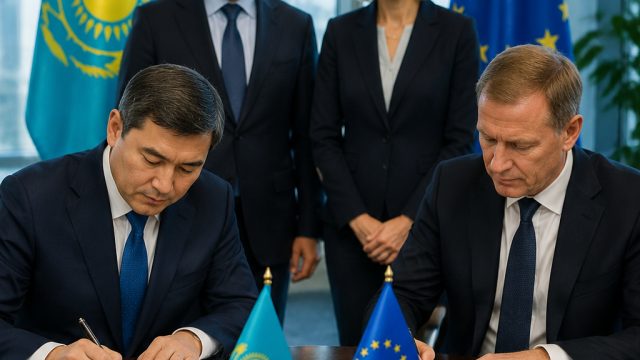
In a significant move to bolster international trade, Kazakhstan and the European Union have recently signed a series of agreements aimed at enhancing the Middle Corridor trade route. This collaboration is poised to play a vital role in connecting Asia and Europe, facilitating smoother trade flows and economic growth. As global supply chains evolve, the timing of these agreements could not be more crucial.
A Strategic Partnership for Trade Expansion
The Middle Corridor, which runs from China through Kazakhstan and into Europe, is increasingly viewed as an alternative to traditional maritime routes. As the demand for efficient and reliable logistics solutions grows, both Kazakhstan and the EU recognize the potential of this route to alleviate supply chain bottlenecks that have emerged in recent years.
Why Now Matters
Several factors underscore the urgency of developing the Middle Corridor:
- Global Supply Chain Disruptions: Recent geopolitical events have highlighted vulnerabilities in global trade routes, prompting a shift towards more diversified options.
- Technological Advancements: Innovations in logistics and transportation technology make this corridor more viable than ever.
- Market Demand: Growing demand for goods and faster delivery times drives the need for efficient trade routes.
Key Components of the Agreements
The agreements signed between Kazakhstan and the EU encompass several key components that aim to enhance the operational capabilities of the Middle Corridor:
- Infrastructure Development: Investment in rail, road, and port facilities to improve connectivity.
- Streamlined Customs Processes: Initiatives aimed at reducing bureaucratic delays at borders.
- Joint Ventures: Collaboration between businesses from both regions to foster trade opportunities.
Impact on Regional Economies
The implications of these agreements extend beyond just Kazakhstan and the EU. Neighboring countries and regions are likely to benefit from increased trade activity. As the Middle Corridor becomes a more frequent choice for logistics, the surrounding economies are expected to see:
- Job Creation: Increased trade leads to a higher demand for logistics and transportation jobs.
- Investment Opportunities: Enhanced infrastructure attracts foreign investment, boosting local economies.
- Greater Market Access: Easier access to European markets for Central Asian products.
The Future of the Middle Corridor
Looking forward, the Middle Corridor is set to play a critical role in the shifting landscape of global trade. As more stakeholders recognize its potential, investments in this route are expected to grow, leading to:
- Increased Trade Volume: As efficiency improves, more businesses will opt to use this corridor for their shipping needs.
- Partnerships Across Borders: Regional cooperation will enhance trade capabilities and foster goodwill among nations.
- Sustainability Initiatives: Development of eco-friendly logistics solutions will align with global sustainability goals.
Potential Challenges Ahead
While the prospects for the Middle Corridor look promising, several challenges remain. Key concerns include:
- Political Stability: Regional conflicts can disrupt trade flows.
- Regulatory Differences: Harmonizing trade regulations among countries can prove difficult.
- Investment Risks: Potential investors must navigate various risks associated with infrastructure projects.
Conclusion
The agreements between Kazakhstan and the EU signify a critical step towards revitalizing the Middle Corridor trade route. As these nations work together to improve trade logistics, the benefits are poised to ripple through the regional economy and beyond. Stakeholders must remain vigilant and proactive to harness the full potential of this strategic partnership while addressing the inherent challenges. As global trade continues to evolve, the Middle Corridor is likely to emerge as a key player in connecting markets across continents.
