

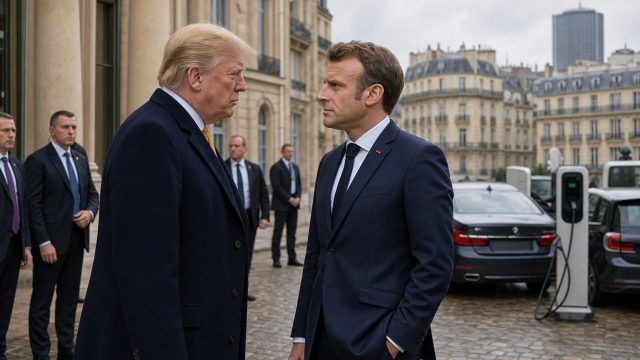
In a pivotal moment for international relations, former President Donald Trump disclosed insights into his recent trip to France, revealing a complex dynamic in his relationship with French President Emmanuel Macron. This admission comes at a time when global diplomatic challenges are at the forefront, highlighting the intricate nature of political alliances.
The Context of Trump's Visit to France
Trump's decision to accept Macron's invitation to dine with world leaders at the historic Palace of Versailles was not made lightly. The former president, known for his often unpredictable nature, initially hesitated, reflecting a mix of personal and political considerations. This visit was not just a formality; it represented a significant opportunity for dialogue on pressing global issues.
Why It Matters Now
The geopolitical landscape is shifting rapidly, with emerging challenges such as climate change, economic instability, and international security threats. Trump's acknowledgment of Macron's understanding of his vulnerabilities underscores the delicate balance leaders must maintain when navigating these complex issues. The ability to recognize and accommodate perceived weaknesses can be a powerful diplomatic tool.
An Examination of Trump and Macron's Dynamic
Macron and Trump have had a tumultuous relationship marked by both cooperation and tension. Trump's recent comments shed light on how Macron's approach might have effectively influenced Trump's decision-making process.
Past Interactions Between the Leaders
- At times, Macron has publicly challenged Trump on environmental policies.
- The two leaders have shared moments of camaraderie, yet their differing approaches often lead to friction.
- Macron's diplomatic style contrasts with Trump's more unorthodox methods, creating a unique dynamic.
This tension is emblematic of broader issues within international diplomacy, where personal relationships between heads of state can significantly impact negotiations and policy decisions.
Implications for Future Diplomacy
Trump's reflections on his relationship with Macron signal important insights for current and future leaders in navigating international relations. As nations face unprecedented challenges, the ability to engage in candid conversations while also addressing personal vulnerabilities could define successful diplomacy.
Key Takeaways for Leaders
- Understanding opponents' perspectives can foster cooperation.
- Leaders must balance their strengths and weaknesses to navigate complex political terrains.
- The art of diplomacy often lies in building relationships based on mutual respect and understanding.
This moment serves as a reminder that diplomacy is as much about personal interactions as it is about policies and agreements. The willingness to engage honestly with one another may lead to more effective solutions in an increasingly interconnected world.
Conclusion: A Call to Action for Future Leaders
As we reflect on Trump's comments regarding Macron, it becomes clear that the landscape of international relations demands more than just strategic thinking; it requires emotional intelligence and the ability to cultivate relationships. As global challenges continue to evolve, future leaders must adopt a nuanced approach that combines strength with vulnerability. The lessons learned from this dynamic can pave the way for more effective diplomacy in the years to come.
