

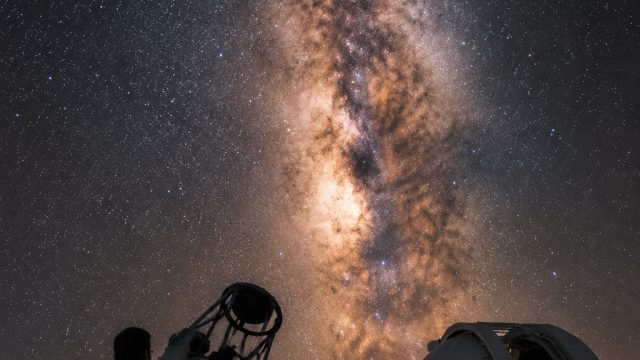
In a groundbreaking achievement, the European Space Agency (ESA) has captured the most detailed image yet of the Milky Way’s galactic center, presenting a stunning vista that showcases millions of stars and cosmic structures. This advancement not only enhances our understanding of the universe but also emphasizes the ongoing evolution of astronomical technology and research.
Understanding the Significance of the Milky Way’s Core
The Milky Way galaxy, a sprawling collection of stars, gas, and dust, houses a dense central bulge rich with celestial wonders. Studying this area is crucial for astronomers as it provides insights into the formation and evolution of our galaxy. The latest imaging from ESA’s Euclid telescope is poised to deliver unprecedented data that could reshape our understanding of galactic dynamics.
The Role of ESA's Euclid Telescope
Launched with the mission to explore fundamental questions about the composition and evolution of the universe, the Euclid telescope employs advanced imaging technology that allows it to peer deeper into space than ever before. This unprecedented capability has yielded:
- A detailed survey of the distribution of dark matter.
- Insights into the life cycles of stars within the crowded galactic core.
- A clearer understanding of gravitational interactions between stars and black holes.
What the New Images Reveal
The recently obtained images from the Euclid telescope highlight the rich tapestry of stars congregating at the Milky Way’s heart. These visuals present a vibrant display of stars, with many previously hidden from view due to cosmic dust obscuring line of sight. Notable features include:
- Star Clusters: The images showcase dense clusters of stars that are vital for understanding stellar evolution.
- Black Holes: Enhanced detection of supermassive black holes at the galactic center, providing clues about their growth and impact on surrounding stars.
- Galactic Structures: Stunning details of the Milky Way's spiral arms and their interactions with nearby celestial bodies.
Advanced Techniques in Astronomical Imaging
The remarkable clarity of the images is attributed to novel imaging techniques. Using specialized filters, the Euclid telescope can isolate light from various wavelengths, allowing astronomers to distinguish between different celestial phenomena. This is particularly valuable in identifying star formation regions and tracking the motion of stars influenced by gravity.
The Broader Impact of This Discovery
Understanding the Milky Way's core is more than just an academic pursuit; it has profound implications for our grasp of the universe. As we decode the secrets of our galaxy, we gain insights that may influence research in various fields, including:
- Cosmology: Understanding dark matter and energy.
- Astrophysics: Gravitational effects on star formation.
- Exoplanet Research: Implications for finding habitable worlds nearby.
The Future of Galactic Studies
With these groundbreaking findings, the future of galactic studies looks promising. The data obtained by the Euclid mission will not only enhance our knowledge of the Milky Way but could also be instrumental in shaping future space missions and telescopes aimed at exploring deep space. The collaboration between global astronomers and advanced technology underscores the importance of continued investment in space exploration.
Conclusion: A New Era in Astronomy
The latest revelations from the Milky Way's galactic center are a testament to human ingenuity and our relentless pursuit of knowledge about the cosmos. With the roadmap laid out by ESA’s Euclid mission, we are on the brink of a new era in astronomy, where each discovery brings us closer to unraveling the mysteries of our universe. As we stand at the threshold of this exciting chapter, the potential for future discoveries remains limitless.
