

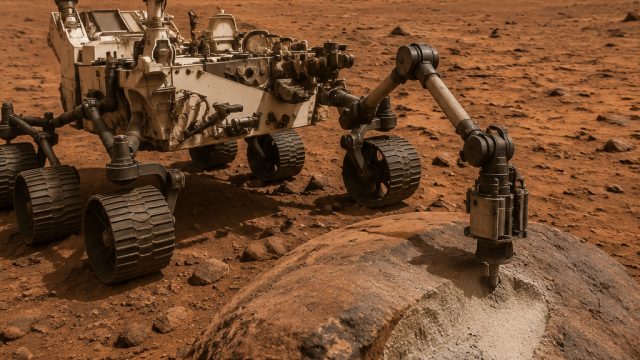
The quest to uncover the mysteries of life's existence beyond Earth has taken a thrilling turn, as NASA's Perseverance rover recently detected signs of ancient microbial life on Mars. This groundbreaking discovery could reshape our understanding of the planet’s history and its potential to harbor life. As space enthusiasts and researchers eagerly analyze these findings, the implications for astrobiology and future explorations are profound.
A New Chapter in Mars Exploration
Since landing in Jezero Crater in February 2021, the Perseverance rover has been on a mission to seek signs of life that may have once existed on the Red Planet. Its latest analysis reveals the presence of complex organic carbon molecules embedded in Martian rock formations. While this discovery does not confirm past life, it certainly provides tantalizing evidence that Mars once had conditions suitable for life.
Understanding the Findings
The rover's findings are remarkable for several reasons:
- Complex Carbon Molecules: The identification of organic compounds hints at the planet's ability to support life in its ancient past.
- Mudstone Analysis: The rover analyzed mudstone at a site believed to be a lakebed, a prime location for preserving microbial life.
- Geological Significance: These rocks are millions of years old, providing a window into Mars's wet and potentially habitable past.
Why This Discovery Matters Now
The potential detection of ancient microbial life forms on Mars is particularly significant given the growing interest in extraterrestrial life. As governments worldwide ramp up their space exploration efforts, understanding our cosmic neighbors becomes increasingly urgent. Here’s why this discovery is timely:
1. The Race for Mars Exploration
With missions from other countries planned, including Europe’s ExoMars rover, the competitive landscape for Martian research is heating up. This underscores the importance of Perseverance's findings as they may guide future missions in selecting prime exploration sites.
2. Public Interest and Funding
The excitement generated by potential signs of life could lead to increased public interest in space exploration, ultimately influencing funding and support for future missions. As we invest in technology to explore Mars further, these findings are vital for justifying the costs associated with such ambitious projects.
3. Implications for Astrobiology
If microbial life once thrived on Mars, it raises questions about the possibility of life elsewhere in the universe. Astrobiologists are particularly excited about the implications of discovering life forms in extreme environments, providing insights into how life might exist on other planets or moons.
Conclusion: A Future of Discovery Awaits
As NASA's Perseverance rover continues its mission, the journey to uncover Mars's secrets is far from over. The recent findings of organic compounds stimulate scientific inquiry and foster hope for finding definitive signs of past life. This exciting chapter in space exploration reminds us of the endless possibilities that lie beyond our planet.
Stay tuned for more updates as scientists delve deeper into the data collected by Perseverance, paving the way for future explorations and discoveries that may one day change our understanding of life itself.
