

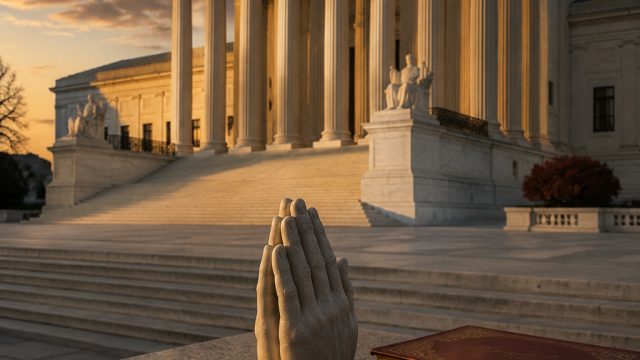
In a significant week for legal precedents, the United States Supreme Court delivered rulings on two pivotal cases concerning religious freedom. These decisions, finalized with a 6-3 vote, mark crucial developments in the ongoing discourse surrounding religious liberties in America.
Overview of the Cases
The Supreme Court's recent deliberations focused on two distinct cases that, while separate in their specifics, converge on the broader theme of religious rights. The rulings not only address individual cases but also set important precedents for how religious freedoms can be interpreted and protected under U.S. law.
The Case Involving Cisco
In a notable victory for technology giant Cisco, the Supreme Court ruled that companies cannot be held liable for aiding and abetting violations of anti-torture laws in contexts where their actions are not directly linked to the violations. This ruling emerged from claims made by members of China’s Falun Gong movement, who alleged that Cisco provided technology that facilitated human rights abuses. The court’s decision underscores a critical legal principle: corporate responsibility has limits, especially regarding external political actions in international contexts.
Implications for Religious Freedom
The implications of these rulings extend well beyond the cases at hand. By affirming that companies cannot be automatically held accountable for actions outside their direct control, the Supreme Court has set a precedent that may influence future cases involving a multitude of industries. This ruling is particularly pivotal for sectors operating in countries with contentious human rights records, as it provides a clearer framework for corporate liability.
- Corporate Accountability: Companies may face fewer legal repercussions in instances where their technology is used for oppressive measures.
- Precedent Setting: Future cases may rely on this ruling for interpretation of corporate responsibility in complex international laws.
- Human Rights Advocacy: Activists may need to rethink strategies for holding corporations accountable for their actions abroad.
The Significance of Religious Freedom in Legal Contexts
Religious freedom remains a cornerstone of American democracy, and the Supreme Court's rulings highlight the ongoing struggle to balance these rights with corporate interests. The decisions made this week serve as a reminder of the delicate nature of protecting these freedoms while navigating the complexities of global business practices.
Public Response and Future Considerations
Public reaction to the Supreme Court's rulings is a mixed bag, with many advocating for stronger protections for human rights against multinational interests. As discussions around corporate responsibility and human rights intensify, these rulings will likely fuel debates in legislative and social arenas.
Conclusion
The recent Supreme Court rulings on religious freedom and corporate accountability are not only legal milestones but also pivotal for civil rights movements. As the landscape of religious freedom continues to evolve, the implications of these decisions will resonate across various sectors, shaping the dialogue on human rights and corporate responsibility for years to come.
