

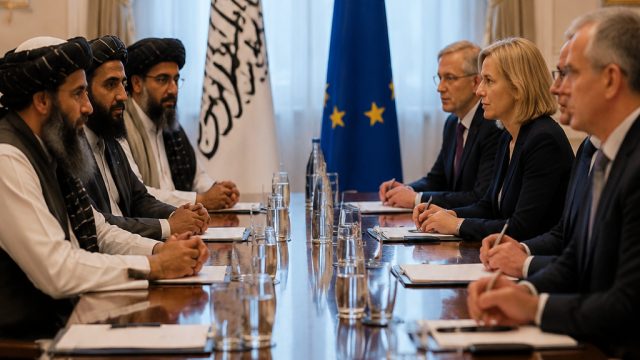
Critical Talks Between Taliban and EU: A Turning Point for Afghan Migration
The recent announcement of closed-door negotiations between the Taliban and EU officials marks a pivotal moment in the evolving landscape of Afghan migration. These discussions, centering on deportation policies, are crucial, given the ongoing humanitarian crisis in Afghanistan and the EU's shifting stance on immigration. As the world closely monitors these talks, the implications for Afghan citizens seeking refuge and stability become increasingly pressing.
The Context of the Talks
Since the Taliban's return to power in August 2021, Afghanistan has faced a multitude of challenges, including a dire economic situation and widespread human rights violations. In this complex environment, the EU has grappled with the influx of Afghan refugees while also responding to internal pressures regarding immigration policy.
Humanitarian Crisis and Migration Patterns
- Severe economic downturn leading to food insecurity
- Increase in human rights abuses, particularly against women and minorities
- Escalating number of Afghans seeking asylum in Europe
The EU's decision to engage in dialogue with the Taliban represents a significant shift in approach, moving from outright condemnation to a more pragmatic stance aimed at managing refugee flows. This shift raises questions about the EU's long-term immigration policy and its ethical implications.
What the Talks Mean for Afghan Deportations
One of the main topics expected to arise in the discussions is the issue of Afghan deportations. With several EU member states expressing a desire to deport Afghan nationals who have failed to secure asylum, the negotiations are set against a backdrop of urgency.
Key Issues on the Agenda
During these closed-door meetings, several critical issues will likely be on the agenda:
- Establishing a framework for safe deportations
- Addressing concerns over human rights violations in Afghanistan
- Exploring potential EU assistance for Afghan refugees
By addressing these issues head-on, the Taliban and EU officials could pave the way for a more stable migration policy that balances national security concerns with humanitarian obligations.
International Reactions and Future Implications
The international community is watching these negotiations closely, as they will likely set precedents for how other nations engage with the Taliban. Countries with similar migration challenges are particularly invested in the outcomes of these talks.
Potential Consequences of the Talks
- Possible increase in diplomatic relations between the Taliban and EU
- Influence on global migration policies regarding Afghan nationals
- Impact on humanitarian aid provided to Afghanistan
As the talks unfold, stakeholders must consider the broader implications for both Afghan citizens and the countries that host them. Will this dialogue lead to a more humane approach to migration, or will it simply reinforce barriers for those seeking safety?
Conclusion: Why This Matters Now
The conversations taking place between the Taliban and EU officials are not just political maneuvering; they represent a critical juncture for countless Afghans facing uncertainty. With the humanitarian crisis in Afghanistan deepening and the EU grappling with its own immigration challenges, these talks are more than timely—they are essential. As citizens and policymakers alike await the outcomes, one thing remains clear: the stakes are incredibly high for the future of many vulnerable individuals.
