

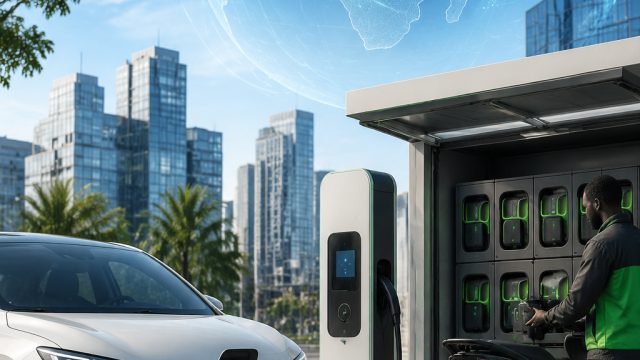

New Funding Boosts Africa's EV Charging and Battery-Swapping Initiatives
The electric vehicle (EV) landscape in Africa is about to undergo a significant transformation, thanks to a recent massive funding round that aims to scale EV charging infrastructure and battery-swapping networks. Spiro, a key player in the EV sector, has just announced its successful acquisition of $270 million in funding, a pivotal move that can hasten the transition towards sustainable transportation in the continent.
Understanding the Impact of Spiro's Investment
The funding secured by Spiro is not just a financial milestone; it represents a growing recognition of the importance of electric mobility in Africa. This investment is anticipated to enhance the availability of EV charging stations and facilitate the development of a comprehensive battery-swapping infrastructure, which are essential for reducing the barriers to electric vehicle adoption.
Why Battery-Swapping? A Game Changer for Accessibility
Battery-swapping technology allows drivers to replace their depleted batteries with fully charged ones at designated swapping stations. This approach offers numerous advantages:
- Reduces downtime: Drivers can quickly swap batteries in under five minutes.
- Lower upfront costs: Users can purchase an EV without the expensive battery.
- Sustainable energy management: Stations can charge batteries when energy demand is low, maximizing efficiency.
The Growing Demand for EV Infrastructure in Africa
As the number of electric vehicles on African roads is projected to increase, the demand for robust EV infrastructure is more pressing than ever. Countries across the continent are beginning to recognize the environmental and economic benefits of adopting electric mobility solutions, spurred on by global trends towards sustainable energy.
Current State of Electric Mobility in Africa
Despite the challenges, including limited infrastructure and high initial costs, progressive initiatives are reshaping the future of transport in Africa:
- Increased government incentives for EV purchases.
- Investment in renewable energy sources to support charging stations.
- Partnerships between local governments and private companies to expand infrastructure.
What This Means for Future Growth
The recent funding round led by Spiro is expected to catalyze further investments into Africa's energy landscape. By enhancing EV charging and battery-swapping capabilities, the continent is positioning itself as a significant player in the global electric mobility sector. This transformation is crucial for reducing dependency on fossil fuels and meeting international climate commitments.
Challenges Ahead
While the funding is a promising step forward, several challenges remain. These include:
- Infrastructure gaps in rural areas.
- Public awareness and acceptance of electric vehicles.
- Maintaining a sustainable supply chain for battery production.
Conclusion: A Future Driven by Electric Mobility
The $270 million investment in Africa’s EV and battery-swapping network is not merely an economic boost; it is a signal that the transition to electric mobility is gaining momentum. As Spiro and others work to establish a more comprehensive infrastructure, the continent can look forward to greener, more sustainable transport solutions that will benefit both the economy and the environment. For stakeholders in the automotive and energy sectors, this is a critical moment to engage with a rapidly evolving market that is ripe for innovation and growth.
